

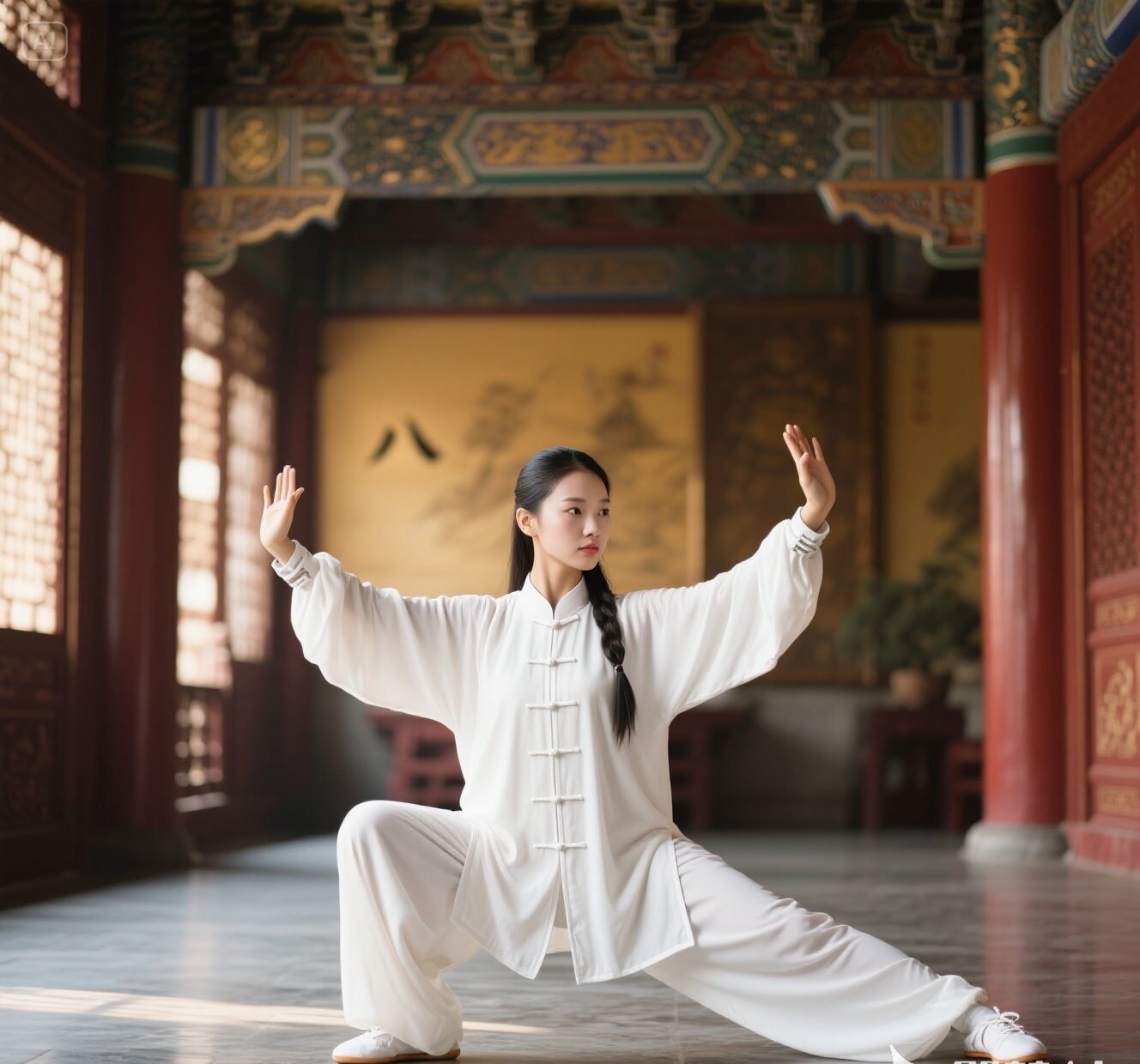
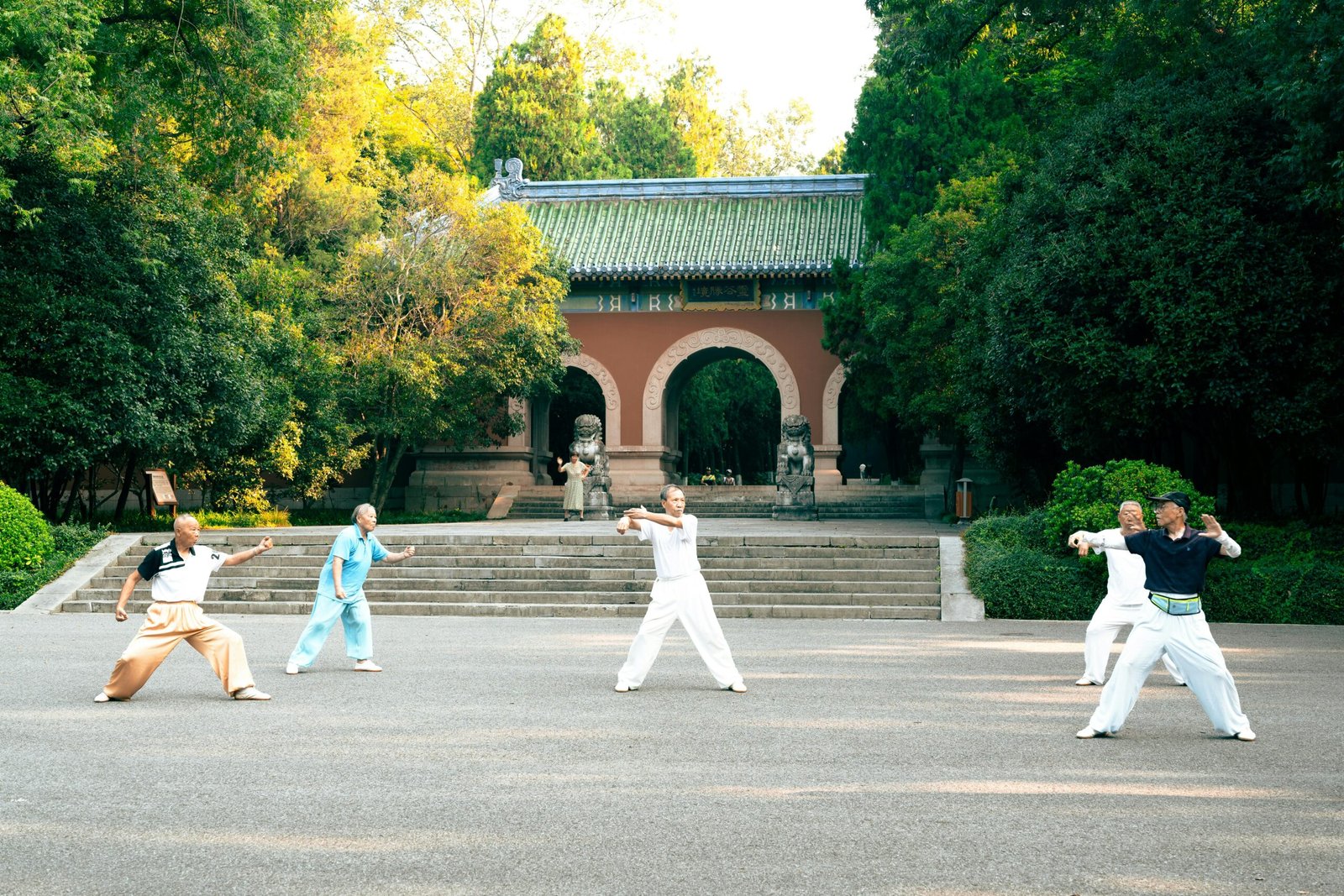
Tai Chi is often seen as a soft, slow, and peaceful practice—but behind its gentle appearance lies a deep reservoir of ancient wisdom, moving stories, and life-changing health benefits. For centuries, Tai Chi has been used not only as a martial art but also as a healing practice, a philosophical discipline, and a method of personal transformation.
This article explores the emotional side of Tai Chi—the inner journey—through historical stories, Taoist teachings, and modern science that proves its value as one of the best no-equipment mind-body exercises in the world.
The Spiritual Roots of Tai Chi: A Path Born on Wudang Mountain
Long before Tai Chi spread to villages and cities, it was deeply influenced by Taoist culture on Wudang Mountain, a sacred place known for meditation, martial arts, and spiritual cultivation.
Taoist monks believed that true strength does not come from muscle but from inner harmony, a concept known as 内修 (inner cultivation). They practiced meditation, breathwork, and slow, flowing movements that connected body, breath, and awareness.
These early Taoist practices later influenced the development of Tai Chi, teaching that:
- 柔 (softness) is more powerful than rigidity
- 静 (stillness) creates clarity
- 缓 (slowness) builds deep awareness
- 圆 (circularity) reflects natural cycles
- 松 (relaxation) unlocks true internal strength
This philosophy distinguishes Tai Chi from all other forms of exercise. It is not merely a physical movement—it is a holistic lifestyle that improves wellness from the inside out.
The Story of Yang Luchan: From Poor Servant to Tai Chi Master
One of the most inspiring stories in Tai Chi history is that of Yang Luchan, the founder of the Yang Style.
Born into poverty, Yang Luchan worked as a servant for the Chen family in Henan Province. He was fascinated by the quiet, circular movements practiced by the Chen martial artists. Although forbidden to learn, he secretly observed them through cracks in the door.
Late at night, he would go alone to the fields and imitate what he had seen.
He practiced silently, slowly, with full attention—developing deep internal power even without formal training.
One night, the Chen family master discovered him. Instead of punishing Yang Luchan, he recognized the young man’s dedication and decided to teach him personally.
Years later, Yang Luchan became so skilled that he was known as “Yang the Invincible.”
But he never relied on force. Instead, he taught that:
“True power is born from softness. In softness, there is endless strength.”
This principle later became the foundation of the Yang Style, the most widely practiced Tai Chi form in the world today.
And his story remains a reminder that Tai Chi welcomes anyone—regardless of age, background, or strength level.
It is a path of patience, dedication, and inner peace.
Tai Chi as a Healing Art: Stories of Transformation
Throughout history, Tai Chi has been used as a natural healing method for people experiencing stress, chronic pain, emotional exhaustion, or imbalance.
A Qing Dynasty Scholar’s Recovery
Historical records tell the story of a scholar who suffered from constant anxiety, insomnia, and digestive problems due to exam stress. After being advised by a Taoist monk, he began practicing slow Tai Chi movements paired with deep breathing.
Within months, he reported:
- improved digestion
- calm emotions
- clear thinking
- restful sleep
- better physical balance
He wrote in his diary:
“Through slowness, I discovered strength. Through softness, I found peace.”
This pattern repeats throughout history—Tai Chi helps people heal from the inside, gently restoring balance to both body and mind.
Philosophical Foundations of Tai Chi
Tai Chi is deeply connected to Chinese philosophy, especially the teachings of Laozi and Zhuangzi.
1. Yin-Yang: The Balance of Opposites
Tai Chi symbolizes the dynamic balance of yin and yang:
- softness and firmness
- slowness and quickness
- stillness and movement
- mind and body
When yin and yang are in harmony, the body becomes healthy, the mind becomes peaceful, and energy flows naturally.
2. Harmony with Nature
Taoist philosophy teaches that humans should follow the natural flow of life.
Tai Chi movements imitate:
- the smooth flow of rivers
- the softness of clouds
- the circular rotation of the earth
This connection to nature creates a deep sense of grounding and tranquility.
3. The Power of Stillness
Tai Chi teaches that stillness is not the absence of movement—
It is the presence of awareness.
When the mind becomes calm, life becomes easier.
Stress dissolves naturally.
Decisions become clearer.
Health improves without force.
Modern Health Advantages of Tai Chi
Today, medical research supports what ancient masters already knew:
Tai Chi is one of the best mind-body exercises for long-term health.
Physical Benefits
- Improves balance and reduces fall risk
- Enhances flexibility, joint health, and mobility
- Reduces chronic pain in neck, shoulders, and back
- Supports heart health through gentle, continuous movement
- Boosts immune system function
- Promotes better breathing and lung capacity
Mental and Emotional Benefits
- Reduces stress, anxiety, and mental tension
- Improves emotional stability and resilience
- Sharpens focus and mental clarity
- Supports better sleep
- Enhances overall mood and confidence
Lifestyle Benefits
- No equipment required
- Perfect for home workouts
- Suitable for beginners and seniors
- Safe, gentle, and sustainable long-term
- Helps counteract the health damage from long hours of sitting
Tai Chi is not just a workout.
It is a holistic wellness system that benefits the entire person.
Tai Chi as a Modern No-Equipment Fitness Method
As more people search for simple, sustainable, low-impact routines, Tai Chi has become one of the most popular no-equipment fitness practices in the world.
You need only:
- a small space
- a quiet mind
- slow, mindful movement
Tai Chi fits perfectly into:
- home workout plans
- office wellness routines
- active aging programs
- stress relief practices
- mindfulness and meditation schedules
Its low-impact nature makes it suitable for pain relief, rehabilitation, and long-term health maintenance.
Conclusion: Tai Chi as a Lifelong Inner Journey
Tai Chi is more than history, philosophy, or exercise—it is a journey back to yourself.
Through slow movement, you discover deep awareness.
Through softness, you discover inner strength.
Through stillness, you discover clarity.
Through balance, you discover peace.
In a modern world filled with noise, stress, and hurry, Tai Chi remains a timeless reminder:
“When you move slowly enough, you can finally hear your own heart.”