

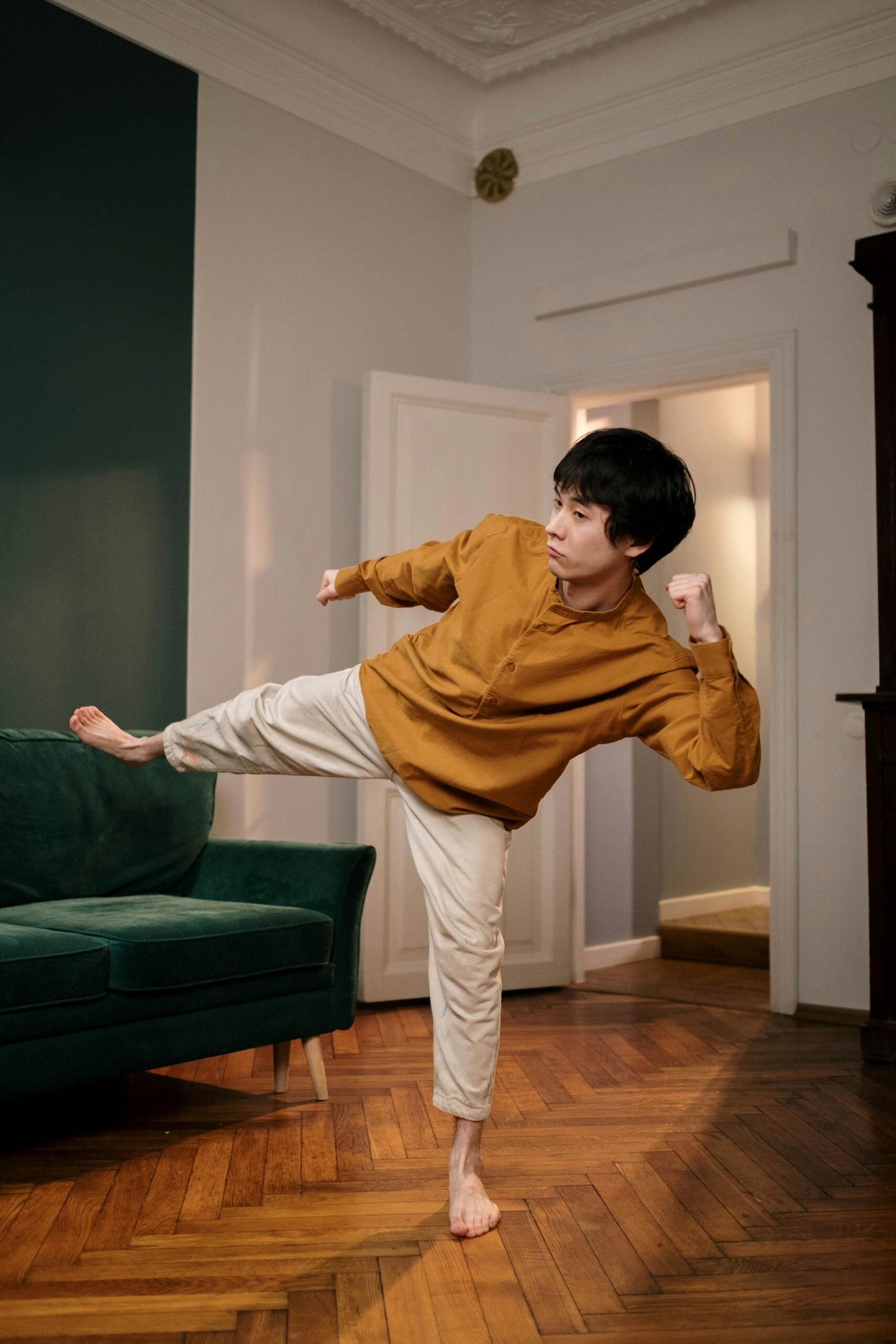
Tai Chi is often described as “quiet outside, powerful inside.” Although its movements appear soft and slow, its roots stretch deep into China’s rich cultural history, shaped by ancient masters, Taoist philosophy, and centuries of refinement. Today, Tai Chi is recognized globally as one of the most effective no-equipment mind-body wellness practices, perfect for modern people seeking stress relief, long-term health, and emotional balance.
This article explores Tai Chi’s legendary origins, the wisdom of early masters, the healing philosophy behind the art, and why it has become one of the world’s most popular low-impact home workout practices.
I. The Quiet Strength of Tai Chi: A Look Back in Time
Tai Chi began in a time when martial arts, medicine, and philosophy were deeply intertwined. Unlike other martial arts that focused on speed and strength, Tai Chi emphasized softness, balance, internal power, and harmony.
1. The Chen Village: Where Tai Chi Took Shape
Historical records show that Tai Chi originated in Chenjiagou (Chen Village) during the 17th century. The Chen family developed a unique martial system based on:
- spiral motion
- relaxed power
- whole-body coordination
- breath integration
- internal energy flow
This early form of Tai Chi was powerful yet gentle, rooted in Taoist ideas about balance and natural movement.
2. The Story of Chen Wangting
Chen Wangting, a retired Ming Dynasty military officer, is often credited as the first person to organize Tai Chi into structured routines.
Disillusioned by war, he retreated into a quiet life of farming and meditation.
There, he combined:
- Taoist breathing
- internal energy circulation
- ancient Chinese medical theory
- soft martial principles
The result was a practice that healed the body, calmed the mind, and aligned the spirit.
Chen Wangting once said:
“The heart governs the energy, and the energy governs the body.”
This belief later influenced all Tai Chi styles.
II. The Rise of Tai Chi Through Legendary Masters
Tai Chi did not spread widely until several key figures brought it out of its village origins.
1. Yang Luchan – Spreading Tai Chi Nationwide
Yang Luchan learned from the Chen family through years of dedication and hardship.
When he later traveled and taught in Beijing, his soft, relaxed movements amazed scholars, nobles, and martial artists alike.
People were struck by how he could gently neutralize attacks without aggression.
Through Yang Luchan and his descendants, Tai Chi evolved into a more accessible, smoother, and slower form—ideal for people of all ages.
This became Yang Style Tai Chi, now practiced by millions worldwide.
2. Sun Lutang – Blending Philosophy and Internal Arts
Another important figure, Sun Lutang, was a Taoist scholar and internal martial arts master.
He emphasized:
- internal strength
- soft power
- meditation
- alignment of breath and consciousness
His writings helped the world understand Tai Chi not just as a martial art, but as a spiritual and philosophical practice.
III. The Heart of Tai Chi: Wisdom from Taoist Philosophy
Tai Chi is deeply rooted in the teachings of Laozi, Zhuangzi, and Taoist principles that emphasize naturalness and harmony.
1. The Yin-Yang Philosophy
Tai Chi embodies the balance of yin and yang—the complementary forces found in all aspects of life.
- yin: soft, receptive, inward
- yang: strong, active, outward
True health requires these forces to stay in harmony.
When one dominates, stress, fatigue, or illness may arise.
2. Wu Wei – Effortless Flow
Taoism teaches Wu Wei, meaning “effortless action.”
Tai Chi follows this concept through slow, relaxed movement that requires no strain or muscular force.
When practicing Tai Chi:
You flow with your breath.
You move without tension.
You return to your natural rhythm.
3. Harmony with Nature
Tai Chi encourages feeling the world around you—
the wind, the trees, the rhythm of breath, the quiet of the mind.
This connection brings grounding, clarity, and emotional peace.
IV. Tai Chi as Healing: Ancient Wisdom Meets Modern Science
For centuries, Tai Chi was used by scholars, monks, and common people to restore health, reduce stress, and improve emotional well-being.
Today, medical studies confirm its benefits.
1. Physical Health Benefits
- Enhances flexibility and mobility
- Strengthens legs, hips, and core gently
- Improves posture and spinal alignment
- Supports cardiovascular health
- Reduces chronic pain (neck, shoulders, back, knees)
- Boosts immune function
Because Tai Chi is slow and low-impact, it is safe for:
- seniors
- beginners
- people recovering from inactivity
- people with joint issues
2. Emotional and Mental Benefits
Tai Chi is often called “moving meditation” because its slow rhythm encourages mental calmness.
Benefits include:
- reduced stress and anxiety
- emotional stability
- better concentration and clarity
- improved mood
- deeper sleep
- enhanced self-awareness
3. Long-Term Lifestyle Benefits
Tai Chi becomes a lifelong wellness partner:
- helps counter the effects of long sitting
- supports healthy aging
- promotes mindfulness in daily life
- improves energy and vitality
- builds sustainable wellness habits
V. Tai Chi as the Global No-Equipment Wellness Trend
In today’s busy world, people increasingly prefer simple, natural, and accessible fitness methods.
Tai Chi has become a global favorite because:
- it requires no equipment
- it fits into small spaces
- it can be practiced anywhere
- it is a low-impact home workout
- it supports both mental and physical health
Unlike high-intensity workouts that often cause injury or fatigue, Tai Chi strengthens the body from the inside.
It offers an approach that matches modern wellness trends:
- bodyweight exercise
- gentle exercise
- stress management
- mindfulness training
- emotional healing
- longevity practice
Even 10 minutes a day can create noticeable improvements in mood, posture, energy, and mental clarity.
VI. Conclusion: Why Tai Chi Remains Timeless
Tai Chi is not loud, aggressive, or fast.
Yet it is one of the world’s most powerful wellness systems.
It teaches that true strength is found in softness, true clarity is found in stillness, and true energy flows when the body and mind become one.
After hundreds of years and countless changes in society, Tai Chi continues to thrive because it gives people what they need most:
- balance
- healing
- inner peace
- resilience
- natural strength
In a world full of noise, Tai Chi remains a quiet path inward—
a journey of awareness, harmony, and lifelong wellness.