

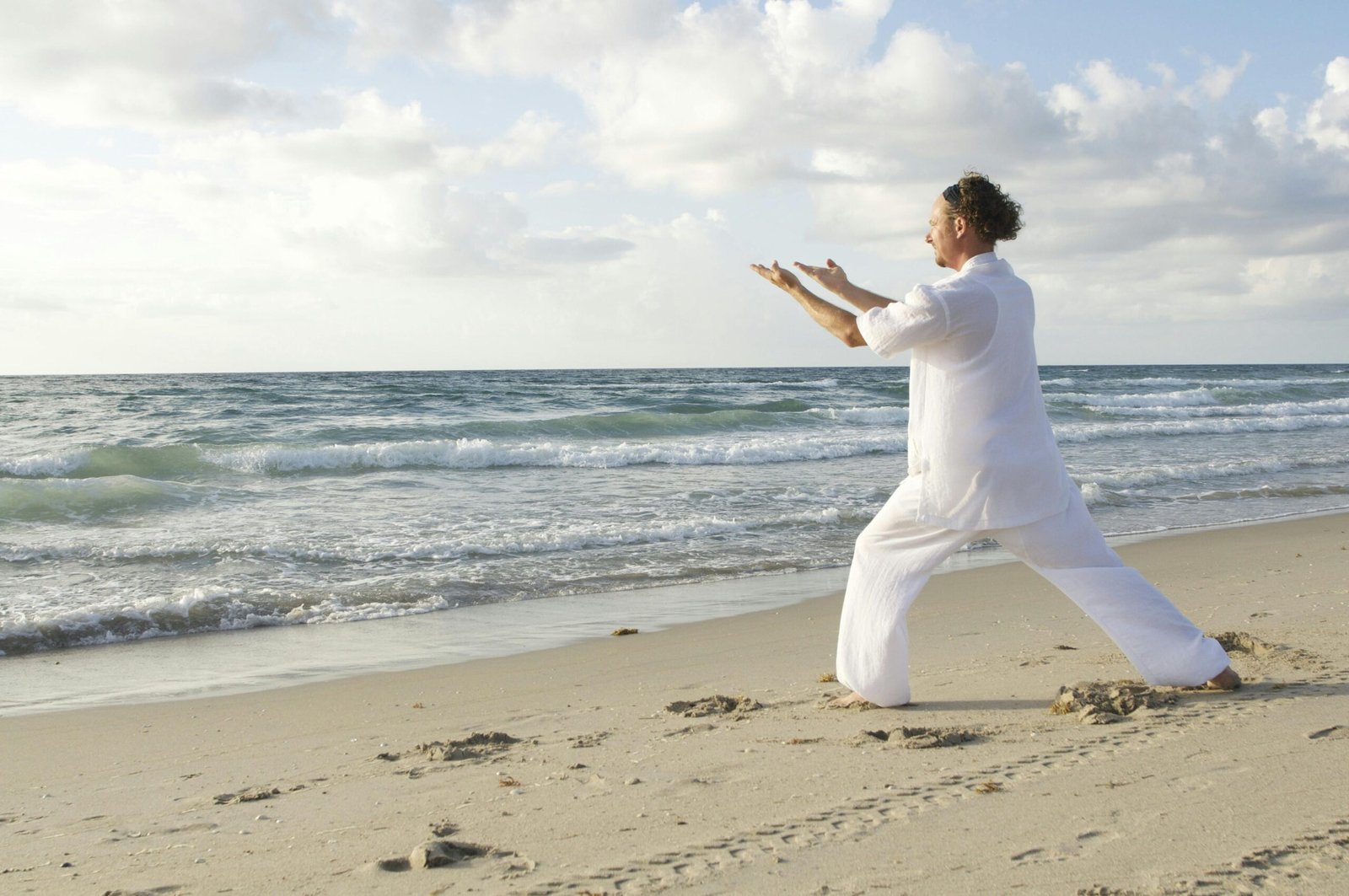
Tai Chi did not originate in a busy city, nor in the noise of crowds. It began in the still, timeless mountains of Wudang—a place where clouds linger longer than people, and silence feels like a living presence. In this quiet world, early Taoist practitioners discovered a rhythm that would later become the foundation of Tai Chi: a rhythm not built on force, but on nature.
From the beginning, Tai Chi was never meant only for warriors or monks. It was meant for ordinary people—for those who feel overwhelmed, tired, stressed, anxious, or physically stiff from modern life. It was designed not to push the body harder, but to guide it back to balance.
1. Tai Chi Is Born from the Mountains, but Meant for Ordinary Life
Life today moves too fast. Yet Tai Chi carries the opposite energy—slow, gentle, grounded. Its slowness is not weakness; it is wisdom. It invites the body back into a natural pace, allowing muscles to release tension and the mind to quiet its endless noise.
In ancient Wudang, masters practiced Tai Chi not to become stronger, but to become clearer. They observed nature—the flow of rivers, the circling of wind, the rising and falling of breath—and understood that health comes from harmony, not force.
This philosophy makes Tai Chi timeless. Even if you live far from mountains, its wisdom is still for you.
2. The Body Remembers Tension, and Tai Chi Helps It Forget
Modern stress accumulates silently:
- tight shoulders
- stiff neck
- shallow breathing
- tense jaw
- restless thoughts
- difficulty sleeping
Over time, these become the body’s “default mode” without us noticing.
Tai Chi works like a slow reset.
Because it moves gently and continuously, it gives the body a chance to release long-held patterns:
- muscles unclench
- joints soften
- breath deepens
- circulation improves
- nervous system calms
Tai Chi doesn’t fight the body—
it teaches the body to let go.
Slow movement becomes a form of deep healing that modern people rarely experience.
3. Why Slow Movements Heal More Deeply Than Fast Ones
We often believe:
- faster is better
- harder is more effective
- sweating means success
But Tai Chi tells a different truth:
When you slow down, you finally feel what’s happening inside.
Slow heals because:
- Slow movement reveals where tension hides
Fast motion skips over the body’s signals. Slow motion makes them visible. - Deep muscles and fascia finally participate
These areas are often tight due to sitting and stress. Tai Chi gently wakes them. - The nervous system shifts out of “fight or flight” mode
Slow breathing + slow movement = the body finally enters recovery mode. - Slow prevents injury while creating long-term improvements
Tai Chi is gentle enough for beginners but deep enough for lifelong practice.
This is why Western scientists call Tai Chi “the most sustainable exercise in the world.”
4. Tai Chi Is the Most Accessible Form of Healing Movement
No equipment.
No gym.
No pressure.
Just space the size of a yoga mat.
Tai Chi fits every lifestyle:
- for office workers
- for people with stress
- for those with neck/shoulder tension
- for poor sleep
- for stiff or aging bodies
- for anyone who wants gentle recovery
Its simplicity is the reason millions continue practicing it for decades.
It is a wellness practice, not a performance.
5. Tai Chi Is the “Slow Medicine” for the Modern Age
As the world moves faster, the body collapses under pressure.
Tai Chi gives you a rhythm to return to yourself:
- slower breath
- softer muscles
- calmer mind
- deeper awareness
- lighter emotions
Many people describe Tai Chi as the first time they feel themselves again.
It is not magic.
It is simply the pace humans were meant to live in.
**6. The True Value of Tai Chi:
To Let You Begin Again at Any Age**
Tai Chi does not care:
- how old you are
- how stiff you feel
- how unfit you think you are
- how long you have ignored your health
It only asks one thing:
start slowly.
Its beauty lies in its inclusiveness:
- Easy for beginners
- Gentle for seniors
- Effective for stressed adults
- Soothing for emotional fatigue
- Healing for chronic tightness
- Sustainable for lifelong practice
Tai Chi is not about perfection.
It is about returning to balance.
**7. Conclusion:
When the Wind Comes from Wudang, You Return to Yourself**
The wind of Wudang carries a message:
You don’t need to force your body to be healthy.
You don’t need intensity to feel strong.
You don’t need speed to make progress.
You just need a practice that brings you back to your natural rhythm.
Tai Chi is that practice.
It softens you without weakening you.
It strengthens you without exhausting you.
It calms you without slowing your life down.
When you step into Tai Chi,
your body begins to flow again,
and your mind finally settles.
This is the ancient wisdom modern life needs most.