

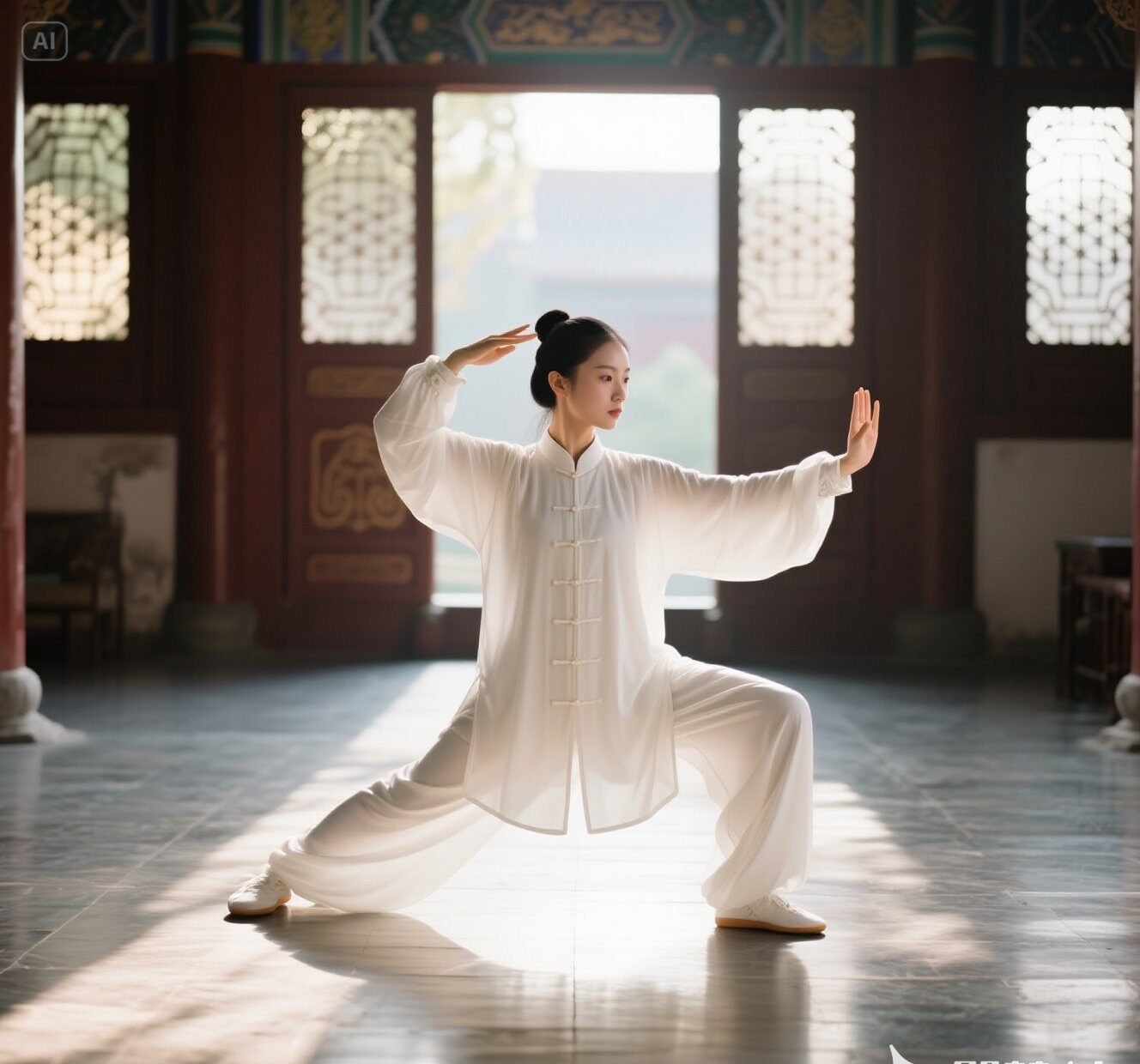
For thousands of years, Tai Chi has been more than a martial art—it has been a living philosophy, a healing system, and a guide for those seeking balance in a chaotic world. Long before modern wellness trends, before gyms, equipment, or fitness apps, the ancient Chinese masters discovered a way to keep the body strong, the mind calm, and the spirit resilient. This path required no tools, no machines, no special environment—only awareness, breath, and the natural movement of life itself.
This article explores a lesser-known chapter in Tai Chi’s history: the lineage of traveling healers, philosophers, and scholars who carried Tai Chi principles across mountains, rivers, and dynasties. Their stories form the spiritual backbone of today’s Tai Chi practice and continue to shape modern wellness concepts such as holistic healing, low-impact exercise, stress reduction, mindful movement, and natural longevity.
Along the way, we highlight the health benefits recognized by both tradition and modern studies, making this an ideal resource for readers searching for terms like “home workout,” “no-equipment exercise,” “gentle mobility training,” “stress relief fitness,” “mind-body wellness,” “holistic healing,” and “healthy aging.”
I. The Origins of Moving Stillness
Legends tell that Tai Chi was born when early Daoist sages observed the natural world. They watched clouds drift over mountains, leaves sway in the breeze, and rivers flow around obstacles. The world was always moving, yet never in conflict. This inspired the idea that strength does not always come from force—sometimes, it comes from harmony.
These early observers began to imitate what they saw. They matched their breath to the rhythm of nature. They explored slow, circular transitions that aligned the joints, released tension, and awakened internal energy. Although science had not yet described the nervous system, these masters discovered intuitively that gentle movement could reduce stress, improve circulation, and bring the mind into a balanced state.
This discovery laid the foundation for what we now call Tai Chi: a form of “moving meditation,” a low-impact, equipment-free practice that improves flexibility, posture, and mental clarity.
II. The Traveling Sage of the Yellow River
One of the earliest Tai Chi storytellers was a mysterious sage who wandered along the Yellow River. He carried no belongings except a bamboo scroll of philosophical verses. Villagers described him as calm, soft-spoken, and capable of soothing even the most restless children with his presence alone.
Whenever he entered a village, he taught a simple message: “The body follows the earth, and the heart follows the sky.”
He guided people through natural, flowing movements. Farmers with back pain, elders with stiff joints, and laborers exhausted from long days discovered relief through the slow, intentional patterns he shared. His teachings emphasized three core principles:
- Breathe with awareness.
- Move as if guided by water.
- Let tension fall away like a stone sinking in a pond.
Though he never used the name “Tai Chi,” his methods embodied the essence of modern mind-body wellness. Today, we would describe his system as gentle mobility training, relaxation therapy, mindful fitness, and low-impact exercise suitable for all ages.
III. The Scholar Who Found Strength in Softness
Centuries later, during a time of political conflict, a young scholar named Xun Wen retreated into the mountains. Overwhelmed by the pressures of war and civil unrest, he sought refuge in ancient texts. There, he discovered teachings about yielding, softness, and internal strength.
Wen practiced slow patterns day after day, learning how his breath could control tension, fear, and worry. He found that softness was not weakness—it was resilience.
Later in life, he wrote: “When the body softens, the heart strengthens. When the breath deepens, the mind becomes clear.”
Modern science echoes his wisdom: slow, mindful movement activates the parasympathetic nervous system, reduces cortisol, improves emotional regulation, and supports holistic healing. Wen’s approach helped countless people during difficult times, proving that Tai Chi principles can bring calm amid crisis.
IV. The Physician Who Used Movement as Medicine
During the Ming Dynasty, a wandering physician named Liu Guanyin revolutionized the way people understood wellness. While treating patients across northern China, he noticed patterns: those who moved daily recovered faster from illness, maintained better balance, and experienced fewer chronic pains.
He began to teach simple flowing routines—not to build muscle, but to improve energy circulation and natural mobility. He believed that movement was the purest form of medicine.
Liu’s legacy lives on in modern wellness trends:
- gentle stretching for pain relief
- low-impact exercise for seniors
- mobility training for office workers
- deep breathing for stress reduction
- mind-body practices for emotional balance
- holistic wellness as a lifestyle
Today’s Tai Chi is directly shaped by these early medical insights.
V. The Hidden Garden of the Eight Immortals
One of the most enchanting Tai Chi stories tells of a secret garden deep within the Wu Mountains. According to legend, the Eight Immortals—representations of wisdom, health, compassion, endurance, and joy—practiced there. Their movements were said to radiate healing energy strong enough to calm storms and nourish the earth.
While mythical, this story reflects a deeper truth: Tai Chi is a practice that harmonizes the mind, body, and environment. Participants often report reduced anxiety, improved sleep, enhanced joint mobility, and a sense of spiritual grounding.
This aligns with today’s popular wellness search terms such as:
- anxiety relief exercises
- natural healing routines
- mind-body connection
- energy balancing methods
- no-equipment fitness for beginners
- longevity and healthy aging
VI. Why Tai Chi Endures in the Modern World
Despite its ancient roots, Tai Chi aligns perfectly with modern health trends:
- No equipment needed – ideal for home workouts and travelers.
- Low-impact and gentle – suitable for all ages and body types.
- Reduces stress and anxiety – one of the most searched wellness goals today.
- Improves mobility and posture – essential for office workers and seniors.
- Supports long-term health – balancing energy, enhancing circulation, and promoting longevity.
This combination of physical therapy, mental clarity training, and spiritual philosophy explains why Tai Chi remains one of the world’s most respected wellness traditions.
VII. Practical Modern Applications (Without Equipment)
While Tai Chi has deep roots in tradition, its modern applications are practical and straightforward:
- Integrate short sessions into your day as a home workout—5 to 20 minutes to reduce tension.
- Use mindful breathing breaks between meetings to restore mental clarity.
- Adopt slow mobility routines as part of an office wellness plan to counteract prolonged sitting.
- Encourage elder care programs to incorporate Tai Chi-style movement for fall prevention and improved balance.
- Blend Tai Chi philosophy with mindful living practices to support long-term holistic health.
These approaches fit diverse lifestyles and require no gym membership, equipment, or special clothing. That accessibility is central to Tai Chi’s global appeal.
VIII. Scientific Support: What Research Tells Us
Over recent decades, scientific studies have examined Tai Chi’s effects:
- Reduced fall risk and improved balance in older adults.
- Decreased symptoms of anxiety and mild depression.
- Better sleep quality among regular practitioners.
- Improvements in chronic pain and arthritis symptoms.
- Enhanced cardiovascular markers and lung function in certain populations.
While research continues to grow, the accumulating evidence supports Tai Chi as a legitimate, evidence-informed component of preventive health and rehabilitation plans.
IX. A Timeless Path for Modern Seekers
Today, millions practice Tai Chi not for combat, but for peace. They seek what the ancient masters discovered:
- A calm mind.
- A strong, flexible body.
- A balanced spirit.
- A life lived in harmony with nature.
You can practice anytime, anywhere—indoors or outdoors, in a park or in your living room. This is the beauty of Tai Chi: its power comes from within, not from equipment or environment.
Conclusion
Tai Chi’s history is filled with sages, scholars, healers, and legends, but its message is simple: wellness is a natural state. Through mindful movement, steady breath, and inner awareness, anyone can cultivate strength, reduce stress, and support long-term health.
In a world of constant noise, Tai Chi offers quiet.
In a world of pressure, Tai Chi offers balance.
In a world of complexity, Tai Chi offers simplicity.
This is the healing path that has survived centuries—and continues to enrich lives today.