

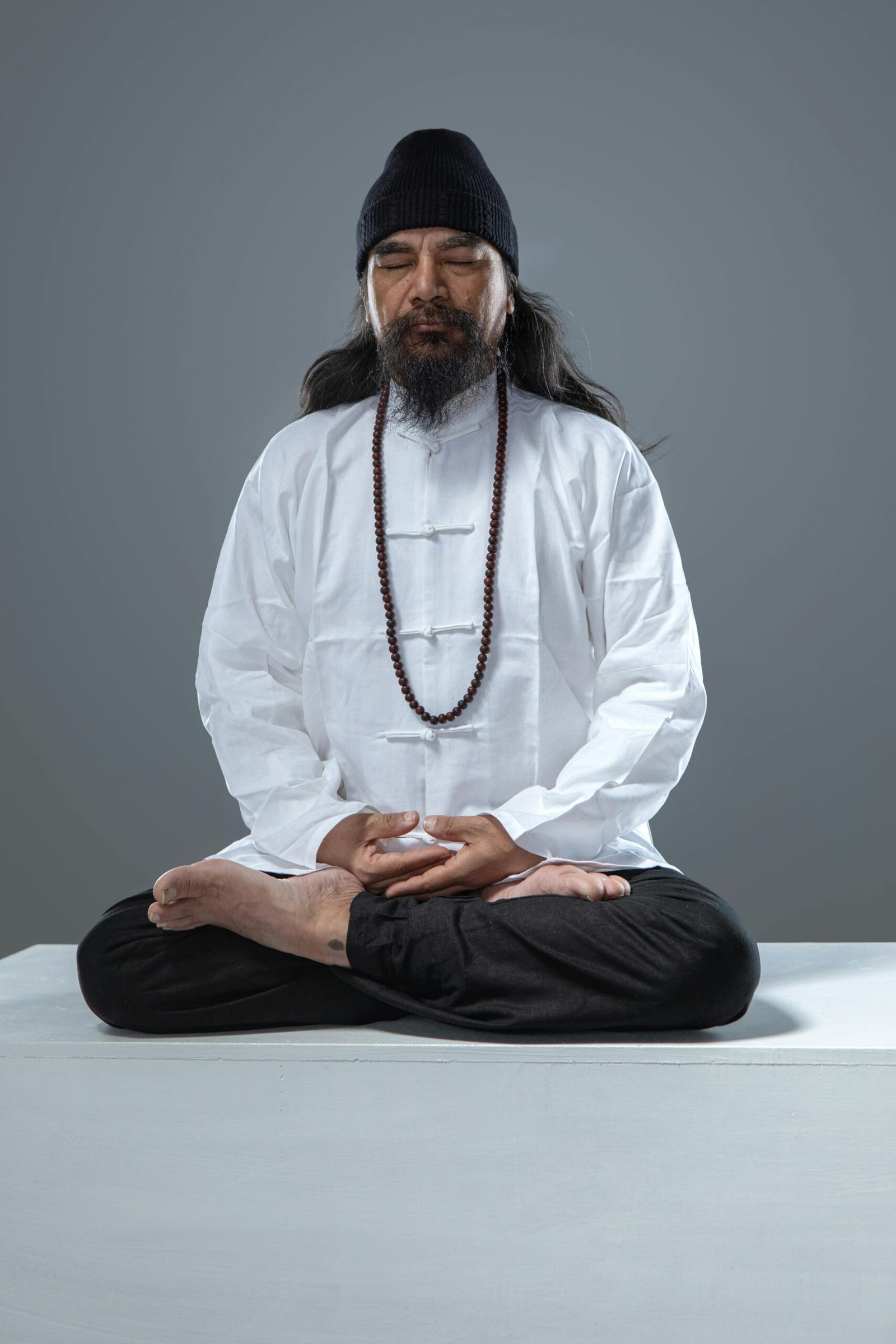
1. When Stillness Became a Medicine
In ancient China, physicians often said:
“Movement heals the body. Stillness heals the spirit.”
Tai Chi was born from this understanding —
a practice that blends gentle movement with deep inner stillness.
Long before it became a global wellness method, Tai Chi was used by scholars, monks, merchants, and farmers who sought:
- clarity in the mind
- stability in emotions
- strength without tension
- long-term health without strain
The ancient masters believed that true vitality did not come from pushing the body harder, but from learning how to quiet the mind and release unnecessary effort.
This is why Tai Chi is often described not as an exercise but as:
“a way of preserving one’s life force.”
2. The Hermit Who Could Calm Storms
Legends tell of a hermit named Old Master Yun, who lived beside a cliff near Wudang Mountain.
Villagers said he had a strange ability:
Even when storms rolled across the valley, he remained calm, drinking tea as the winds howled around his tiny hut.
One traveler once asked:
“How can you stay so peaceful when nature becomes so wild?”
Master Yun replied:
“The storm is outside.
Most people carry a storm inside.”
To him, Tai Chi was not about physical form but a philosophy of staying centered even as the world shakes.
He taught villagers:
- how to breathe softly
- how to loosen their chest
- how to stand without collapsing
- how to allow thoughts to settle naturally
- how to observe emotions without drowning in them
These simple practices improved sleep, reduced stress, relieved tension, and restored clarity — just like modern science describes today.
3. The Quiet Power Behind Slow Movement
Modern people often associate strength with intensity.
But ancient masters believed:
“Softness is the beginning of real power.”
Slow movement awakens deep stabilizing muscles that heavy training often ignores.
Gentle posture realigns the spine without force.
Natural breath enhances circulation and reduces stress hormones.
When combined, these qualities create:
- stronger core stability
- more balanced posture
- reduced neck and shoulder pressure
- improved joint mobility
- calmer nerves
- steadier emotions
This is why elders practicing Tai Chi often walk with a quiet confidence, while younger individuals tense from modern lifestyle feel tired, stiff, or mentally overwhelmed.
4. How Stillness Restores a Tired Mind
Tai Chi contains a concept called “moving stillness” —
a state where the mind remains calm even as the body gently moves.
This state affects the brain deeply:
- reduces mental fatigue
- relaxes overstimulated nerves
- improves concentration
- decreases emotional reactivity
- enhances memory and clarity
- soothes anxiety
- supports long-term emotional balance
The ancient masters described this effect poetically:
“When the breath softens, thoughts lighten.
When thoughts lighten, the heart becomes spacious.”
5. A Scholar’s Escape From Exhaustion
An old diary from the Ming dynasty records the story of Scholar He Yuan.
After years of long night study, he suffered from:
- tight chest
- cloudy thoughts
- stiff neck
- restless sleep
- constant irritation
A monk taught him a simple routine of:
- slow breathing
- soft weight shifting
- gentle standing alignment
- mental quietness
After three months, He Yuan wrote:
“My mind clears like a polished mirror.
The tension behind my head has lifted.
I now understand what the monk meant:
Stillness is the root of strength.”
This story is one of many records showing that Tai Chi was historically a method to restore the scholar’s tired mind, not only the warrior’s body.
6. Why Tai Chi Supports Emotional Well-Being
Today, many people feel:
- anxious
- pressured
- mentally overloaded
- emotionally fragile
- physically tight
- chronically fatigued
Tai Chi counteracts all of these through:
- deep diaphragmatic breathing
- relaxed posture
- slow coordinated movement
- gentle release of muscle tension
- mindful awareness
- natural regulation of the nervous system
These qualities help stabilize mood, improve sleep, and reduce the emotional heaviness created by modern life.
This is why many describe Tai Chi as:
“a refuge — a place the mind can return to.”
7. The Stillness That Holds Up a Lifetime
As the ancient texts say:
“When the inside is calm, everything becomes clear.”
Tai Chi helps people navigate:
- work stress
- family responsibilities
- aging
- chronic discomfort
- emotional turbulence
not by offering intensity, but by teaching:
how to stand naturally,
how to breathe deeply,
how to move softly,
how to think gently.
This gentle, nature-inspired wisdom is the reason Tai Chi has remained a healing practice for centuries.
Not through force.
Not through ambition.
But through quiet strength —
the kind that supports a whole lifetime.