

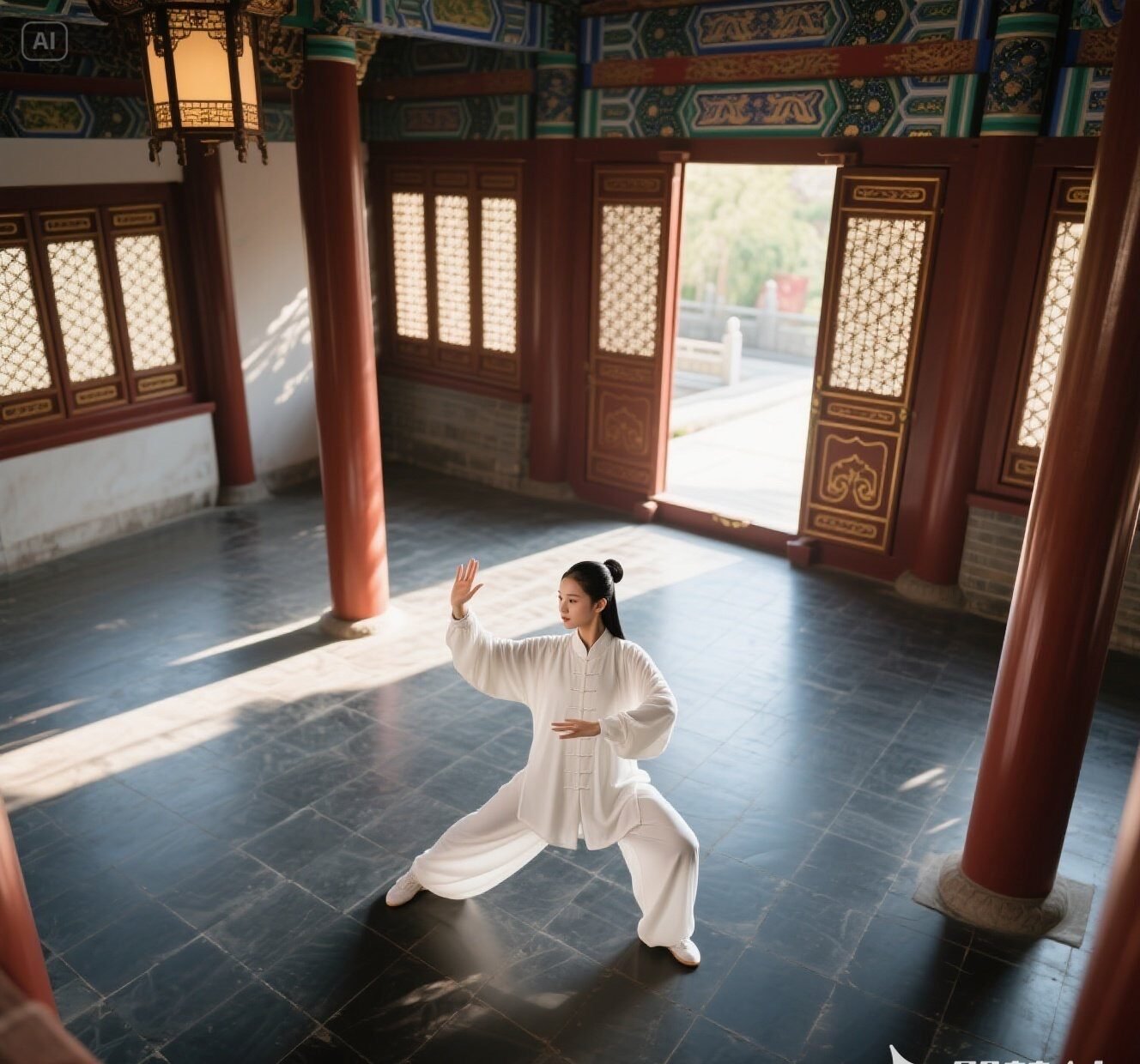
Tai Chi stands as one of the most profound cultural treasures in Chinese history—a practice that effortlessly blends philosophy, martial tradition, and holistic health. Today, it is embraced worldwide as a gentle, low-impact, no-equipment fitness method that supports both physical health and emotional well-being. Yet behind its peaceful appearance lies a deep, complex story shaped by ancient masters, philosophical traditions, and generations of practitioners who refined it into the art we know today.
This article explores the legendary origins of Tai Chi, the historical figures who shaped its development, the philosophical foundations that govern its principles, and the modern wellness benefits that make it one of the most valuable mind-body exercises of our time.
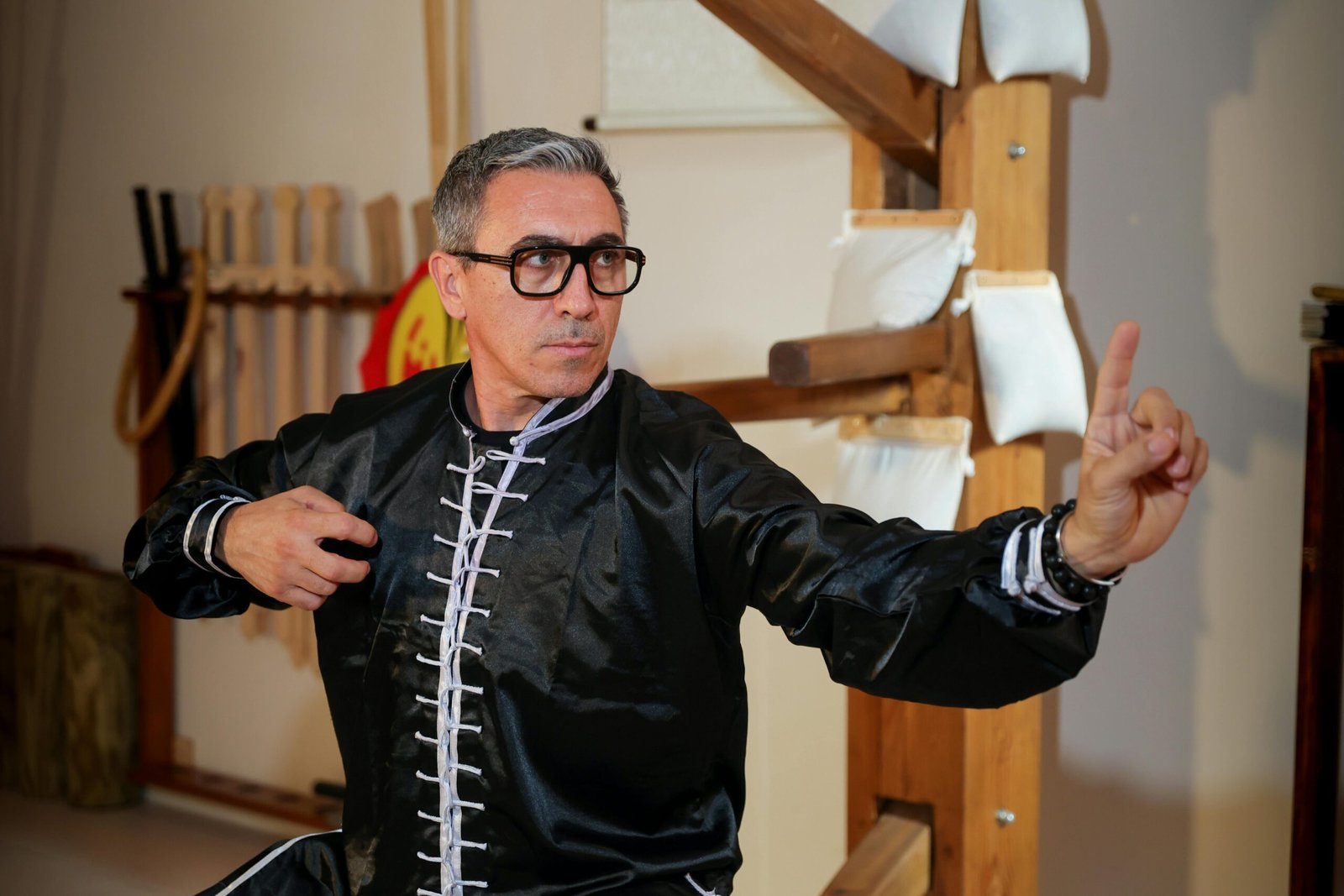
The Legendary Origin: Zhang Sanfeng and the Birth of Tai Chi
The roots of Tai Chi trace back to a legendary Taoist monk named Zhang Sanfeng, who lived during the late Song or early Ming Dynasty. While historians debate his actual existence, his story carries deep philosophical meaning and is widely embraced in traditional Chinese culture.
According to legend, Zhang Sanfeng witnessed a confrontation between a crane and a snake. The crane attacked swiftly with its beak and wings, while the snake remained soft, flexible, and yielding. When the crane struck, the snake moved with fluid curves, never resisting force with force. Instead, it redirected the crane’s energy and countered only when necessary. Inspired by the snake’s softness and adaptability, Zhang Sanfeng developed a new form of martial practice based on yielding, circular motion, inner power, and mindful awareness.
This concept—柔克刚 (softness overcoming hardness)—became the philosophical foundation of Tai Chi and remains central to its practice today.
The Evolution of Tai Chi Through the Centuries
While Zhang Sanfeng represents the mythical origin of Tai Chi, its historical development is more traceable beginning with the Chen family village in Henan, China. The Chen family refined Tai Chi into a structured martial system, laying the foundation for the major styles practiced today.
Chen Style (陈式太极拳): The Earliest Recorded Form
Chen Wangting, a 17th-century military officer, is credited with organizing Tai Chi into its first formal routines. His creation blended Taoist breathing methods, Chinese medicine theory, and the martial movements of his era. Chen Style is known for its spiral motions, sudden bursts of power, and strong emphasis on internal energy.
Yang Style (杨式太极拳): The Most Popular Form Worldwide
In the 19th century, Yang Luchan, known as “Yang the Invincible,” traveled from Hebei to learn from the Chen family. Through years of dedicated study, he mastered the art and later simplified and softened the movements, making them accessible to people of all ages. This became Yang Style, the most widely practiced form in modern times.
Wu, Sun, and Other Styles
Other Tai Chi styles evolved through the creativity of skilled masters such as Wu Quanyou and Sun Lutang. Each style holds unique expressions but shares the same foundational principles of softness, internal strength, balance, and mindfulness.
Together, these styles represent centuries of refinement—proof that Tai Chi is not merely an exercise, but a living cultural tradition.
Philosophy Behind Tai Chi: Harmony, Balance, and Inner Stillness
Tai Chi is deeply rooted in Taoism, one of China’s oldest philosophical systems. Its foundational principles include:
1. Yin and Yang (阴阳平衡)
Tai Chi movements reflect the balance of yin (soft, receptive, slow) and yang (active, expressive, dynamic). Good health, according to Chinese thought, requires the harmonious interaction of these forces.
2. Wu Wei (无为) – Effortless Action
Tai Chi teaches practitioners to act without unnecessary tension. Instead of forcing movements, one flows through them naturally. This idea extends to life: unnecessary struggle leads to stress, while natural flow brings clarity and peace.
3. Stillness Within Motion
Even when the body moves, the mind remains calm. This union of movement and stillness creates a meditative state that supports mental clarity and emotional balance.
4. Internal Strength (内劲)
Tai Chi is not powered by muscular strength but by coordinated breath, structural alignment, and relaxed intention. This inner power makes Tai Chi safe for all ages while still providing deep physical and emotional benefits.
Holistic Wellness Benefits of Tai Chi
As a no-equipment fitness method that requires minimal space, Tai Chi seamlessly fits into modern home workout routines. Yet its benefits go far beyond simple exercise.
Physical Health Benefits
- Improves balance and stability
- Strengthens lower body and core muscles through gentle weight shifting
- Enhances flexibility, joint mobility, and spine health
- Supports cardiovascular health with continuous movement
- Reduces chronic pain, especially in the neck, shoulders, and lower back
- Improves breathing efficiency through mindful inhalation and exhalation
Tai Chi’s slow, flowing motions make it ideal for individuals seeking low-impact exercise that is safe for the joints, especially older adults or those recovering from sedentary lifestyles.
Mental and Emotional Benefits
Tai Chi is widely recognized as a mind-body exercise that promotes inner calm and emotional balance. Benefits include:
- Stress relief and relaxation
- Better emotional regulation and resilience
- Enhanced focus, concentration, and mental clarity
- Reduced anxiety and mild depression
- Improved sleep quality and overall vitality
Many practitioners describe Tai Chi as “moving meditation,” where the gentle flow of breath and movement leads to natural mental quietness.
Lifestyle and Longevity Benefits
As a holistic practice, Tai Chi supports long-term well-being:
- Encourages healthy posture and body awareness
- Promotes mindful living and balanced habits
- Serves as a sustainable lifelong fitness routine
- Helps counter the negative effects of long hours sitting or using screens
- Supports overall longevity by reducing physical and emotional stress
Tai Chi as the Perfect No-Equipment Fitness Practice
In today’s fast-paced world, more people are turning to simple, sustainable fitness methods that do not require equipment or gym memberships. Tai Chi perfectly fits this trend:
- Can be practiced anywhere—home, park, office
- Requires zero equipment and minimal space
- Adapts to all fitness levels, from beginners to advanced practitioners
- Combines physical exercise with mental wellness, unlike most workouts
- Provides long-term benefits without strain or injury
Its gentle nature makes it suitable for busy professionals, seniors, and anyone seeking a healthy lifestyle without intense workouts.