

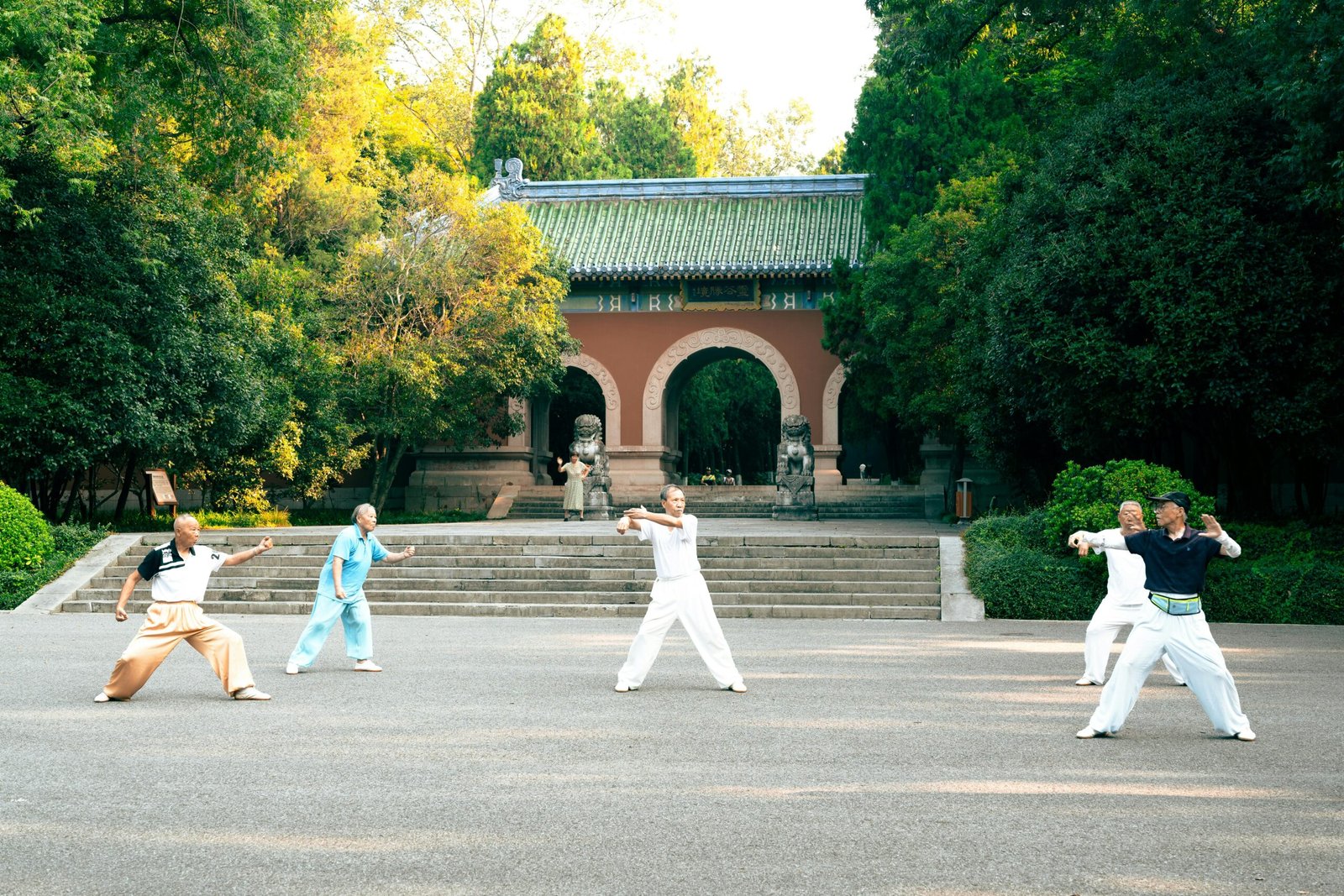
Modern fitness culture often teaches us that progress comes from pushing harder—more sweat, more repetitions, more intensity. But when you look back into China’s ancient wellness traditions, a different truth emerges: the slower you move, the deeper your body heals. Tai Chi, with its graceful, unhurried sequences, is the perfect example of this paradox.
The Forgotten Wisdom of “Slow Is Strong”
In the Wudang mountains centuries ago, Tai Chi masters noticed something profound: when a person slows down completely, their awareness wakes up. Muscles that were always tense begin to soften. Breathing becomes long and smooth. The mind lifts itself out of survival mode.
Slow movement isn’t laziness—it’s precision. It forces the body to activate stabilizing muscles that fast-paced workouts skip over. When you move slowly, your nervous system receives clearer signals, helping it rewrite dysfunctional patterns associated with pain, stiffness, and poor posture.
How Slow Tai Chi Movement Repairs Modern Bodies
Today, many people live in a state of constant tension. Hours of sitting compress the spine; stress locks the shoulders; digital screens shorten the neck. In this condition, fast or violent movement only deepens imbalance.
Tai Chi’s slow flow reverses this by:
- Releasing neck tension through gentle turning and elongation
- Softening shoulder knots with circular joint rotations
- Freeing the lower back via weight shifts that decompress the spine
- Reactivating core stability without strain or impact
- Regulating breath to calm inflammation and stress hormones
This is why Tai Chi is uniquely effective for adults over 30, office workers, or anyone feeling chronically tight and overwhelmed. The body needs a pause before it can rebuild.
Slow Movement Builds Internal Strength
When you move through a form slowly, every second becomes a micro-exercise in balance and control. Your weight transitions become more deliberate. Your feet root more deeply. Your spine learns to elongate and stay relaxed.
This is “internal strength”—a type of power based not on muscle size, but on the integration of breath, balance, and intention. Many practitioners report that this strength shows up not just in their practice, but in walking, sitting, lifting objects, and even sleeping more deeply.
A Meditation for the Body
In ancient Taoist philosophy, movement without awareness is wasted energy. Tai Chi transforms each gesture into a form of mindfulness. You become aware of your body’s subtle language: where it holds, where it collapses, where it resists.
Over time, slow movement becomes a moving meditation that:
- Clears mental fog
- Reduces stress reactivity
- Improves emotional stability
- Reconnects you with your breath and inner rhythm
This is why practitioners often say that Tai Chi doesn’t just fix the body—it balances the heart-mind.
The Modern World Needs Slow Practices
Our lifestyles are fast, loud, and overstimulating. Tai Chi offers a rare sanctuary where slowness is not weakness, but medicine. Practicing only 10–20 minutes a day can fundamentally change your internal environment.
When you slow down, you begin to notice:
your breath deepens, your joints loosen, your sleep improves, and your energy returns.
This is the quiet power of ancient movement.